
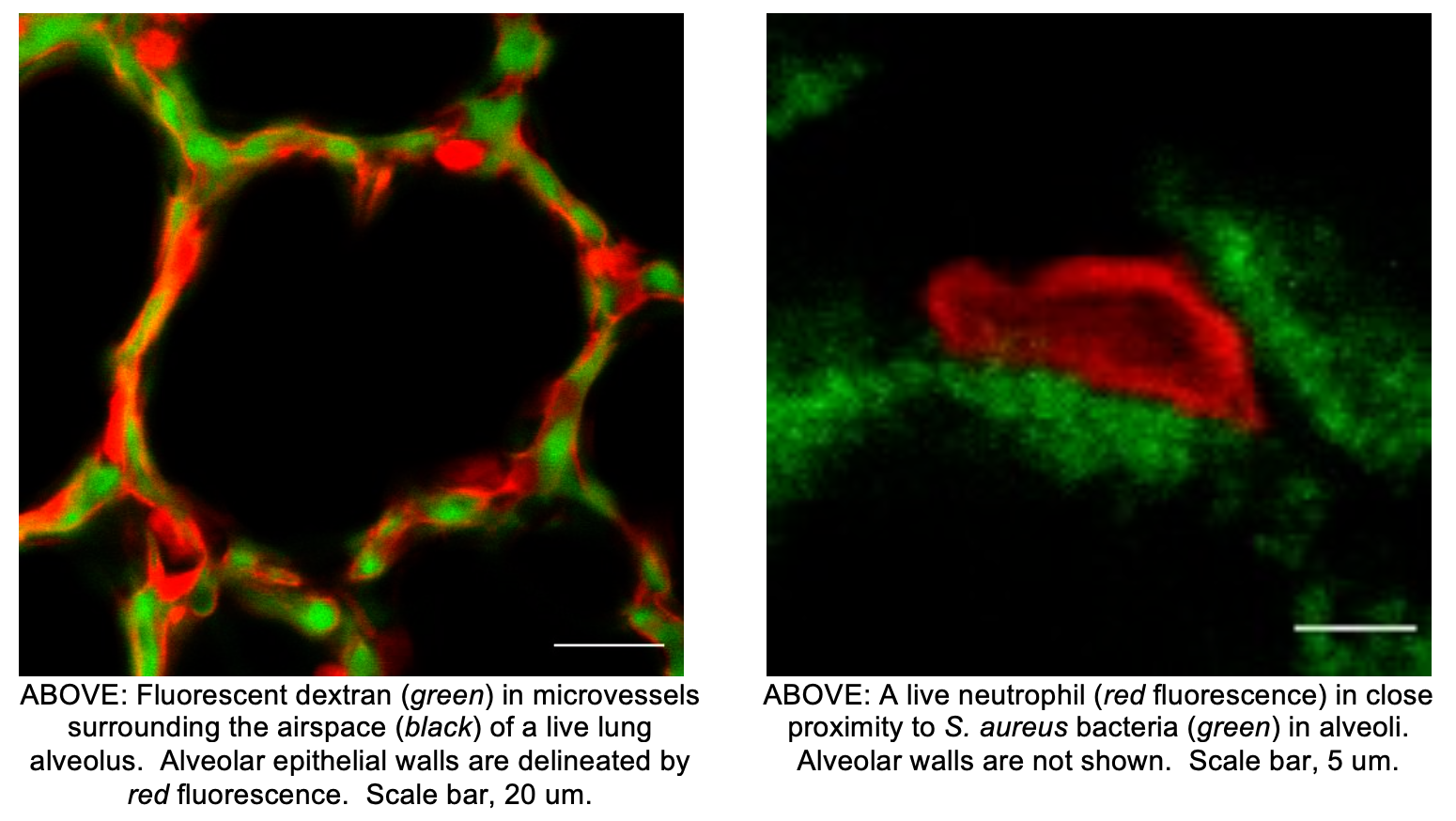
Our goal is to develop new treatments for pneumonia – a major cause of death for people of all ages, around the world.
Pneumonia is the 4th leading cause of death worldwide. Our best treatments are antibiotics and antiviral drugs, but these drugs are not enough. They fail to the save lives of many people who have severe pneumonia, and they may be rendered ineffective in the years to come by the ongoing spread of bacteria and viruses that developed resistance to them.
Our laboratory is taking a unique approach to solving the pneumonia problem. We are leveraging our expertise in pulmonary medicine and lung biology to develop the first approaches to therapy for pneumonia that target the lung, rather than the pathogen. We use confocal imaging of live, intact, perfused lungs to discover how the lung normally defends itself against inhaled pathogens, how these defenses get disrupted to lead to pneumonia, and how the lung heals itself after pneumonia injury to restore lung health. We focus on alveolar physiology and cellular and molecular mechanisms, and we place special emphasis on the role of juxtacrine and paracrine cell-cell communication among cells of the alveolar epithelium, microvascular endothelium, and immune system.
We measure success by our ability to apply this new knowledge to develop new therapeutic approaches for pneumonia that target the lung. In the long term, we hope to contribute to human health and well-being by generating an arsenal of lung-targeted treatments that minimize lung injury, promote lung resilience and repair, and eliminate the threat of antibiotic and antiviral drug resistance.