
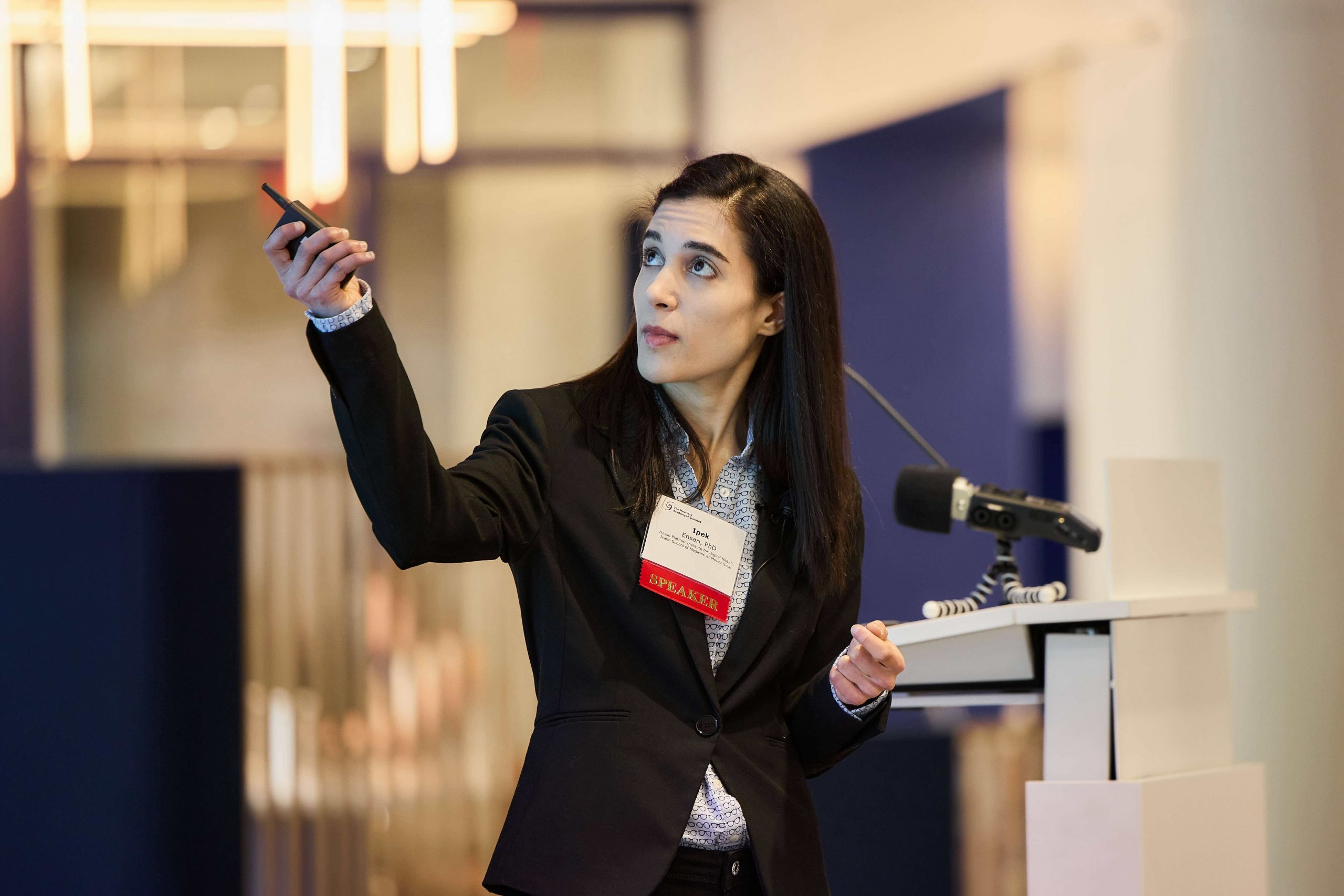
About Ensari Lab
We build digital evidence to make overlooked women’s health conditions more visible, measurable, and actionable.
The Ensari Lab studies how patient-generated digital data, wearable technologies, and AI can improve the understanding and care of understudied women’s health conditions. Our work focuses on conditions such as endometriosis, adenomyosis, fibroids, chronic pelvic pain, and related disorders that can profoundly affect daily functioning and quality of life, yet remain under-documented, poorly managed, and too often dismissed.
Many women’s health conditions remain “elusive” not because they are rare, but because they are often under-documented, lack clear diagnostic markers, and are poorly captured in conventional clinical data. The result is a gap between lived experience and the data used to support diagnosis, treatment, and research.
The Ensari Lab was built to help close that gap. We use mobile health tools, wearable data, and analytic methods to make these data-poor conditions more visible, more measurable, and more actionable in both research and real-world care.
Why we exist
Our point of view
We believe women’s health research and care are limited when important parts of daily lived experience remain invisible in the data used to understand them. We see this, in part, as a question of epistemic justice: ensuring that patients’ lived experience is treated not as anecdotal noise, but as meaningful evidence that can inform research, interpretation, and care.
Better care does not come from more technology alone; it comes from tools and models that are accurate, interpretable, clinically meaningful, and responsive to the realities of living with chronic and reproductive health conditions.
Our work is grounded in the idea that patient-generated data can reveal patterns that are otherwise missed, support earlier recognition of poorly understood conditions, and open the door to more personalized and equitable care.
How we work
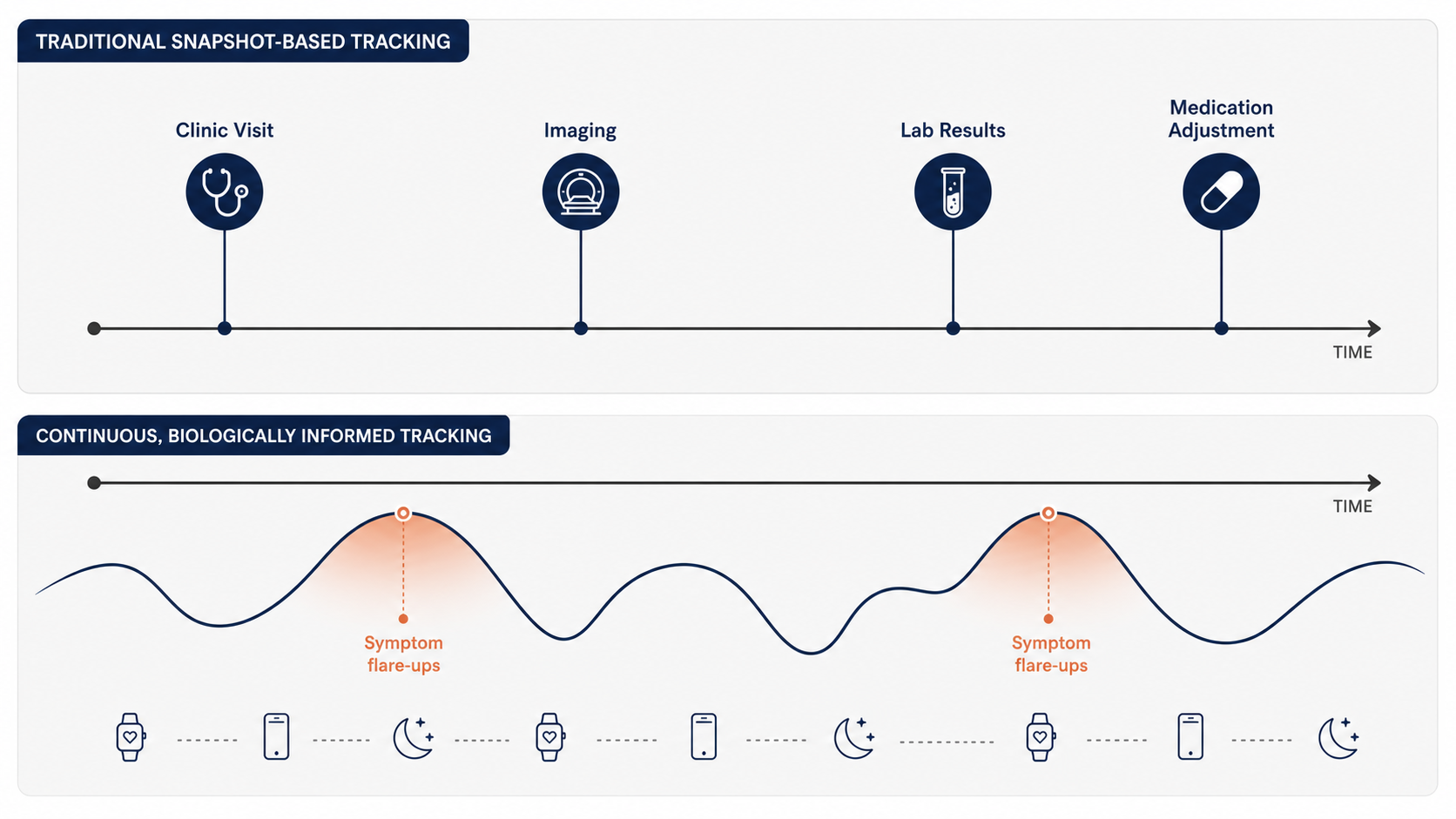
Our work is driven by a practical question: how do we ensure that digital data from apps, wearables, and AI-based tools are accurate, reliable, and clinically useful for women’s health?
To answer that question, we design real-world studies using a variety of supervised and unsupervised learning approaches for patient-generated mHealth data to understand how they perform in everyday life.
Validate digital health methods
We study whether apps, wearables, and AI-enabled tools can generate reliable, valid, and clinically meaningful data for phenotyping female reproductive and pelvic pain disorders.
Interpret patient-generated mHealth data
We develop ways for patients and clinicians to better summarize and interpret longitudinal symptom, behavioral, and physiological data in support of better conversations, better decisions, and more agency.
Study supportive lifestyle strategies
We study exercise and other lifestyle-based approaches that may improve daily functioning, quality of life, and long-term health for people living with chronic pain conditions.
Leadership
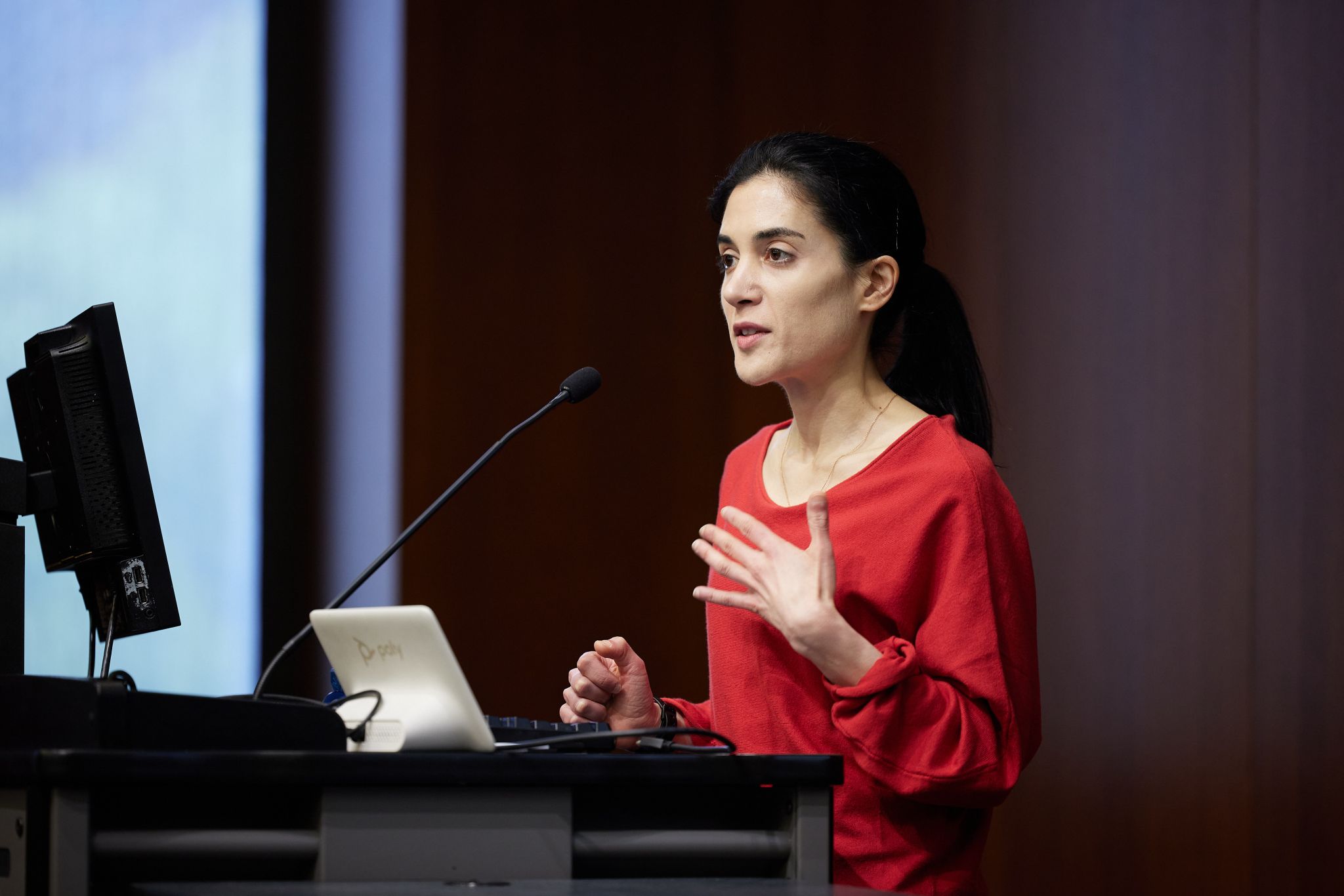
The lab is led by Dr. Ipek Ensari, whose work sits at the intersection of women’s health, digital health, and AI. Her research focuses on how patient-generated data from mobile tools and wearables can improve disease characterization, symptom monitoring, and supportive care for conditions that have historically been understudied or poorly documented.
Under her leadership, the lab brings together interdisciplinary perspectives to ask not only what digital tools can measure (validity and reliability), but also how those measurements should be interpreted and when they can meaningfully support patients, clinicians, and real-world care.
Collaborations
The lab welcomes engagement from collaborators, trainees, clinicians, and community members interested in advancing women’s health through thoughtful, evidence-driven use of digital tools and patient-generated data.
We value interdisciplinary collaboration and work that connects research design, clinical relevance, data interpretation, implementation, and public understanding.
To inquire about trainee opportunities, collaborations, or related work, please contact Dr. Ensari at ipek.ensari@mssm.edu.
How we share knowledge
In addition to peer-reviewed publications, we share ongoing findings and reflections through Data Bytes, our lab blog for research participants and the broader community. We see knowledge sharing as part of the research itself: a way to make digital health science more transparent, more interpretable, and more connected to the people it is meant to serve. This reflects a broader commitment to making women’s health research not only more rigorous, but also more interpretable, transparent, and publicly useful.