

Working at the interface of computational science, genomics, and medicine, we discover the genomic underpinnings of disease and accelerate how we use genomic information in real healthcare systems to improve prevention, diagnosis, and treatment of disease.

Methods for diverse populations, Identity-By-Decent, fine-scale structure, and large-scale genomic inference.
Computational & Population Genomics
We develop scalable computational methods for large-scale genomic analysis, including approaches for modeling population structure, identity-by-descent, and complex ancestry patterns in diverse cohorts. A core focus is demonstrating how population structure can be leveraged to improve power, resolution, and interpretability in both common and rare disease studies and for improving inclusion of diverse populations in genomic research. We work with major biobanks, and our methods are designed for deployment in cloud-based research environments, enabling reproducible analysis across massive, privacy-preserving datasets, and we make our software freely available to the community.
Federal Awards
- NHGRI U01 HG011715 (CAPE) – PRS Center for Admixed Populations & Health Equity (MPI)
- NHGRI R01 HG011345 – Genomic Approaches to Population Health in Multi-Ethnic Hospital Systems (MPI)
- NHGRI R01 HG010297 (PAGE III) – Population Architecture using Genomics and Epidemiology (Co-I)
Affiliated Consortia, Cohorts, and Biobanks
- PAGE Consortium
- TOPMed Consortium
- PRIMED Consortium
- Genomic Sequencing Project
- All of Us Research Program
- Mount Sinai Million Health Discovery Initiative
Patents / Industry Development
- RFMix (Random Forest adMIXture): ancestry inference software (license holder; Stanford)
Recent Representative Publications
- Systematic comparison of phenome-wide admixture mapping and genome-wide association in a diverse biobank – MedRxiv (2025)
- A spectral component approach leveraging IBD graphs – Genome Research (2025)
- Genetic analyses of diverse populations improves discovery for complex traits – Nature (2019)
- Human demographic history impacts genetic risk prediction – AJHG (2017)
Computational & Population Genomics
Methods for diverse populations, Identity-By-Decent, fine-scale structure, and large-scale genomic inference.
We develop scalable computational methods for large-scale genomic analysis, including approaches for modeling population structure, identity-by-descent, and complex ancestry patterns in diverse cohorts. A core focus is demonstrating how population structure can be leveraged to improve power, resolution, and interpretability in both common and rare disease studies and for improving inclusion of diverse populations in genomic research. We work with major biobanks, and our methods are designed for deployment in cloud-based research environments, enabling reproducible analysis across massive, privacy-preserving datasets, and we make our software freely available to the community.
Federal Awards
- NHGRI U01 HG011715 (CAPE) – PRS Center for Admixed Populations & Health Equity (MPI)
- NHGRI R01 HG011345 – Genomic Approaches to Population Health in Multi-Ethnic Hospital Systems (MPI)
- NHGRI R01 HG010297 (PAGE III) – Population Architecture using Genomics and Epidemiology (Co-I)
Affiliated Consortia, Cohorts, and Biobanks
- PAGE Consortium
- TOPMed Consortium
- PRIMED Consortium
- Genomic Sequencing Project
- All of Us Research Program
- Mount Sinai Million Health Discovery Initiative
Patents / Industry Development
- RFMix (Random Forest adMIXture): ancestry inference software (license holder; Stanford)
Recent Representative Publications
- Systematic comparison of phenome-wide admixture mapping and genome-wide association in a diverse biobank – MedRxiv (2025)
- A spectral component approach leveraging IBD graphs – Genome Research (2025)
- Genetic analyses of diverse populations improves discovery for complex traits – Nature (2019)
- Human demographic history impacts genetic risk prediction – AJHG (2017)
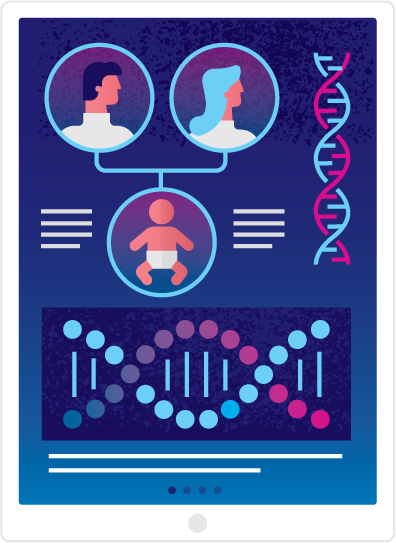
Translating genetic discoveries into accurate, equitable risk prediction tools for diverse populations and real-world clinical care
Polygenic and Integrated Risk Tools for Common Disease Prevention
We study the genetic architecture of common diseases and translate association signals into clinically meaningful measures of risk. The lab has been a leader in evaluating polygenic risk scores across ancestrally diverse populations, developing harmonized performance metrics, ancestry-aware evaluation strategies, and clinically anchored risk thresholds. We work with federal and industry partners on prospective studies and clinical implementation.
Federal Awards
- NHGRI U01 HG011176 – Genomic Risk in Clinical Care to Promote Health Equity (Contact-PI)
Clinical Studies & Consortia
- eMERGE Network
- BioMe BioBank Program
- Mount Sinai Million Health Discoveries Program
Recent Representative Publications
- Ancestry calibration of PRS – medRxiv (2025)
- Selection, optimization and validation of ten chronic disease polygenic risk scores for clinical implementation in diverse US populations – Nature Medicine (2025)
- Managing differential performance of PRS across groups – AJHG (2024)
- Principles for transferring PRS across global populations – Nature Reviews Genetics (2023)
Polygenic and Integrated Risk Tools for Common Disease Prevention
Translating genetic discoveries into accurate, equitable risk prediction tools for diverse populations and real-world clinical care
We study the genetic architecture of common diseases and translate association signals into clinically meaningful measures of risk. The lab has been a leader in evaluating polygenic risk scores across ancestrally diverse populations, developing harmonized performance metrics, ancestry-aware evaluation strategies, and clinically anchored risk thresholds. We work with federal and industry partners on prospective studies and clinical implementation.
Federal Awards
- NHGRI U01 HG011176 – Genomic Risk in Clinical Care to Promote Health Equity (Contact-PI)
Clinical Studies & Consortia
- eMERGE Network
- BioMe BioBank Program
- Mount Sinai Million Health Discoveries Program
Recent Representative Publications
- Ancestry calibration of PRS – medRxiv (2025)
- Selection, optimization and validation of ten chronic disease polygenic risk scores for clinical implementation in diverse US populations – Nature Medicine (2025)
- Managing differential performance of PRS across groups – AJHG (2024)
- Principles for transferring PRS across global populations – Nature Reviews Genetics (2023)
Genomic Medicine & Health Systems
A major emphasis of the lab is embedding genomics into routine clinical care. The lab has built end-to-end pipelines for returning monogenic and polygenic results through large health system–based biobanks and evaluates their impact on patients, clinicians, and care delivery. Complementary digital tools support genomic result disclosure, phenotype-driven diagnosis, and clinical decision-making, enabling genomic medicine at scale.
Federal Awards
- NHGRI U01 HG011176 – Embedded genomics in NYC health systems (Contact-PI)
- NHLBI R01 HL155356 – Early detection of hereditary TTR amyloidosis (Co-I)
- NHGRI U01 HG011176 Supplements – Genome Education in Medicine (PI)
Clinical Studies
- NYCKidSeq – Whole Genome Sequencing as Front-line Modality in Pediatric Care
- TeleKidSeq – Telehealth-based genomic care delivery
- Genomic Screening Program
Medical Education
- Genomic Medicine Education Program
- Speaking Genomics in Clinical Care
Patents & Digital Tools
- GUÍA – Digital genomic result disclosure platform
- GenomeDiver – Phenotype-driven diagnostic decision support
Recent Representative Publications
- Healthcare professionals’ experiences returning genomic results – HGG Advances (2025)
- Patient and providers’ perspectives on using the GUÍA digital tool to enhance genomic results disclosure – Genetic Med Open (2025)
- EHR limitations in pragmatic trials – medRxiv (2025)
- Evaluating parental utility of pediatric genomic testing – HGG Advances (2024)
- Identification of CNVs with genome sequencing (NYCKidSeq) – Clinical Genetics (2023)

Integrating genomic results into clinical care through scalable tools, biobank pipelines, and decision support for patients and providers.
Genomic Medicine & Health Systems
Integrating genomic results into clinical care through scalable tools, biobank pipelines, and decision support for patients and providers.
A major emphasis of the lab is embedding genomics into routine clinical care. The lab has built end-to-end pipelines for returning monogenic and polygenic results through large health system–based biobanks and evaluates their impact on patients, clinicians, and care delivery. Complementary digital tools support genomic result disclosure, phenotype-driven diagnosis, and clinical decision-making, enabling genomic medicine at scale.
Federal Awards
- NHGRI U01 HG011176 – Embedded genomics in NYC health systems (Contact-PI)
- NHLBI R01 HL155356 – Early detection of hereditary TTR amyloidosis (Co-I)
- NHGRI U01 HG011176 Supplements – Genome Education in Medicine (PI)
Clinical Studies
- NYCKidSeq – Whole Genome Sequencing as Front-line Modality in Pediatric Care
- TeleKidSeq – Telehealth-based genomic care delivery
- Genomic Screening Program
Medical Education
- Genomic Medicine Education Program
- Speaking Genomics in Clinical Care
Patents & Digital Tools
- GUÍA – Digital genomic result disclosure platform
- GenomeDiver – Phenotype-driven diagnostic decision support
Recent Representative Publications
- Healthcare professionals’ experiences returning genomic results – HGG Advances (2025)
- Patient and providers’ perspectives on using the GUÍA digital tool to enhance genomic results disclosure – Genetic Med Open (2025)
- EHR limitations in pragmatic trials – medRxiv (2025)
- Evaluating parental utility of pediatric genomic testing – HGG Advances (2024)
- Identification of CNVs with genome sequencing (NYCKidSeq) – Clinical Genetics (2023)

Discovering rare genetic diseases through population-scale analysis to improve diagnosis and equity across diverse populations.
Population-Specific Disease Discovery
The lab pioneers population-genetic approaches to identify founder effects and rare pathogenic variants in large biobanks linked to electronic health records. By integrating fine-scale ancestry inference, identity-by-descent mapping, and deep phenotyping, the lab uncovers underdiagnosed monogenic diseases and establishes frameworks for rare disease surveillance that advance diagnostic equity across populations.
Recent Representative Publications
- Revisiting founder populations in an age of global biobanks – Annual Review of Genomics (2026)
- Advancing precision health discovery in a genetically diverse health system – Cell (2026)
- Admixture mapping of peripheral artery disease – Frontiers in Genetics (2023)
- Toward a fine-scale population health monitoring system – Cell (2021)
- Worldwide frequencies of APOL1 variants – NEJM (2018)
Population-Specific Disease Discovery
Discovering rare genetic diseases through population-scale analysis to improve diagnosis and equity across diverse populations.
The lab pioneers population-genetic approaches to identify founder effects and rare pathogenic variants in large biobanks linked to electronic health records. By integrating fine-scale ancestry inference, identity-by-descent mapping, and deep phenotyping, the lab uncovers underdiagnosed monogenic diseases and establishes frameworks for rare disease surveillance that advance diagnostic equity across populations.
Recent Representative Publications
- Revisiting founder populations in an age of global biobanks – Annual Review of Genomics (2026)
- Advancing precision health discovery in a genetically diverse health system – Cell (2026)
- Admixture mapping of peripheral artery disease – Frontiers in Genetics (2023)
- Toward a fine-scale population health monitoring system – Cell (2021)
- Worldwide frequencies of APOL1 variants – NEJM (2018)
Genomic Technologies & Global Diversity
The Kenny Lab contributes to the development and evaluation of genomic technologies and reference resources designed to improve performance across diverse populations. This includes leadership in multi-ethnic genotyping arrays and next-generation human reference resources, ensuring that genomic tools and databases better reflect global genetic diversity and support accurate clinical interpretation.
Federal Awards
- NHGRI UM1 HG010971 – Center for Human Genome Reference Diversity (MPI)
Affiliated Consortia
- Human Pangenome Project
- GA4GH
Industry & Technology Development
- Illumina MEGA / GSA / GDA arrays
- Human Pangenome Reference
Recent Publications & White Papers
- Beyond the Human Genome Project – Annual Review of Genomics (2024)
- A draft human pangenome reference – Nature (2023)
- Getting genetic ancestry right for science and society – Science (2022)
- Considerations toward a comprehensive genomics strategy – All of Us (2017)
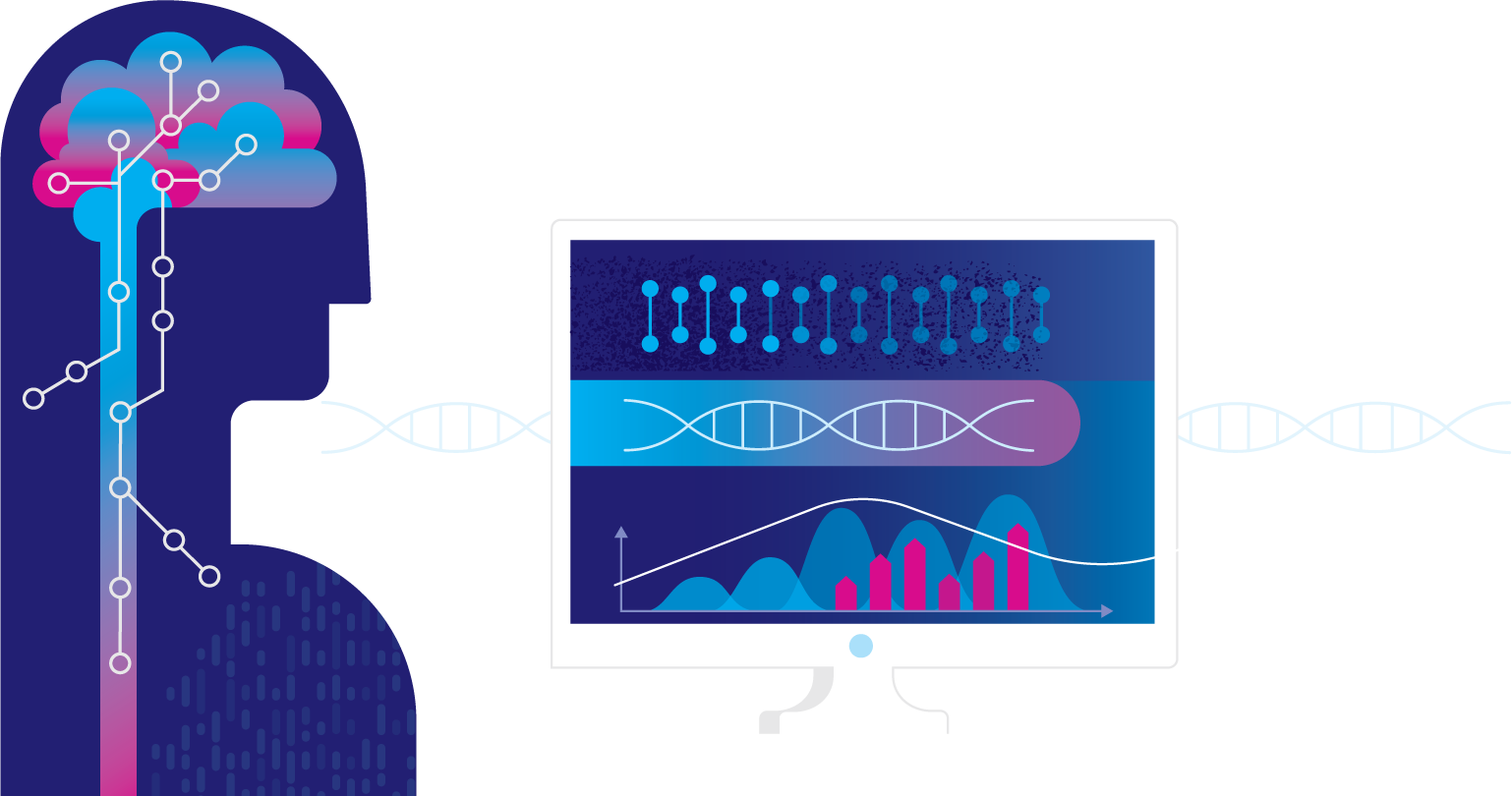
Advancing genomic tools and reference data to improve accuracy and representation across diverse populations.
Genomic Technologies & Global Diversity
Advancing genomic tools and reference data to improve accuracy and representation across diverse populations.
The Kenny Lab contributes to the development and evaluation of genomic technologies and reference resources designed to improve performance across diverse populations. This includes leadership in multi-ethnic genotyping arrays and next-generation human reference resources, ensuring that genomic tools and databases better reflect global genetic diversity and support accurate clinical interpretation.
Federal Awards
- NHGRI UM1 HG010971 – Center for Human Genome Reference Diversity (MPI)
Affiliated Consortia
- Human Pangenome Project
- GA4GH
Industry & Technology Development
- Illumina MEGA / GSA / GDA arrays
- Human Pangenome Reference
Recent Publications & White Papers
- Beyond the Human Genome Project – Annual Review of Genomics (2024)
- A draft human pangenome reference – Nature (2023)
- Getting genetic ancestry right for science and society – Science (2022)
- Considerations toward a comprehensive genomics strategy – All of Us (2017)