
Scientific Theme: Metabolism, Interoception, and Autonomic Regulation
Stress is also not only a psychological experience. Extreme or prolonged stress changes both brain and body physiology through the autonomic nervous system, including sympathetic “fight-or-flight” pathways and parasympathetic “rest-and-digest” pathways. When these systems are chronically disrupted, they can affect fear regulation, cardiorespiratory function, metabolism, immune signaling, and vulnerability to PTSD, panic, and metabolic dysfunction.
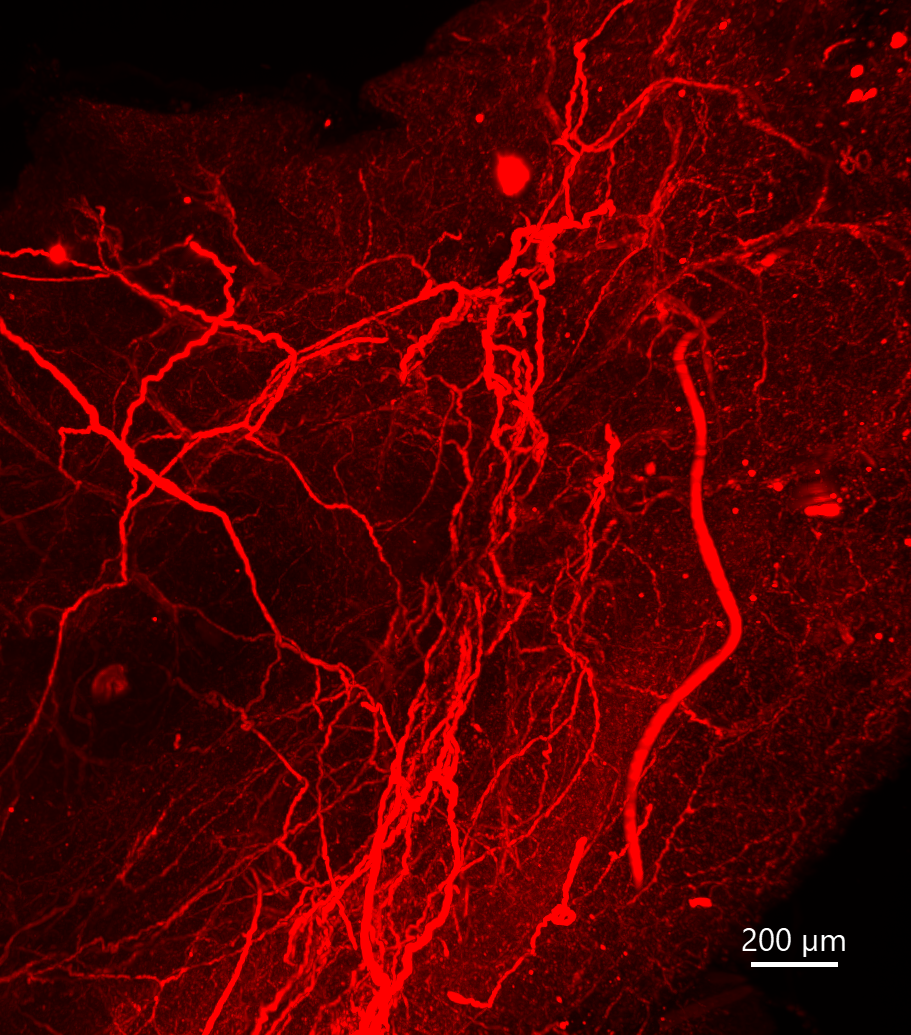
Our research explores how the brain and body communicate to shape stress, emotion, behavior, and health. The brain is one of the most energy-demanding organs in the body, relying continuously on fuel from metabolism and oxygen from breathing to regulate attention, memory, emotion, and cognition. From this perspective, metabolism and breathing are not separate from mental health; they are central to it. A major focus of our research is to understand how breathing and energy metabolism are tied to every aspect of behavioral functions.
Another major focus of our work is interoception: the brain’s ability to sense and interpret internal body signals such as breath, heartbeat, hunger, tension, and visceral state. These inner signals help shape how we feel, how we respond to stress, and how the body maintains physiological balance. We study these processes through a holistic scientific lens that integrates brain circuits, metabolism, autonomic regulation, breath, body signals, and behavior.
Our central questions are:
• How do brain–body pathways, including the vagus nerve, regulate fear, stress, breathing, and autonomic state?
• How does traumatic stress disrupt metabolism, energy balance, and physiological resilience?
• How do interoceptive signals from the body influence emotion, cognition, and mental health?
• Can breathing biology and autonomic regulation provide new pathways for healing and resilience?
To address these questions, we use advanced approaches including genetically modified mouse models, optogenetics, chemogenetics, intersectional viral strategies, telemetry-based cardiorespiratory tracking, metabolic phenotyping, and behavioral models of fear and traumatic stress.
Together, this work is guided by a simple idea: to understand the mind, we must also understand the body. Stress, emotion, awareness, and healing do not arise from one molecule, one brain region, or one pathway alone. They emerge from the integrated relationship between brain, body, breath, metabolism, and inner awareness.
Our research focuses on two interconnected domains:
1. Stress and Energy Metabolism
We aim to understand how chronic stress disrupts metabolic homeostasis, alters sympathetic–parasympathetic balance, and influences energy expenditure, feeding behaviors, and cardiometabolic health.
2. Stress and Interoception
We study how internal bodily signals—such as breathing, heart rate, and visceral states—shape emotional processing, fear responses, and stress resilience. We investigate how brain circuits interpret and modulate these internal cues, with a focus on vagal and neuropeptidergic pathways.
.
Contact Us
Abha Karki Rajbhandari
Principal Investigator
abha.rajbhandari@mssm.edu