
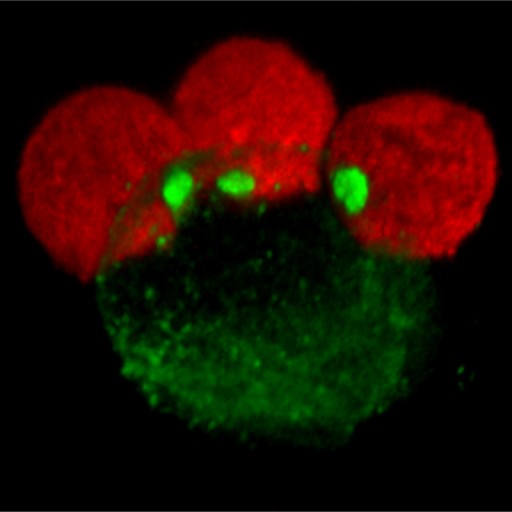
HIV Virological synapse between an infected Jurkat T cell (green) and three primary CD4+ T cells (red).
Our laboratory studies human immunodeficiency virus type 1 (HIV-1), the causative agent of acquired immune deficiency syndrome (AIDS), which causes a chronic persistent infection of the immune system. When left untreated immunodeficiency is lethal, and while we now have effective treatments, there is still no vaccine or cure. Much of our work has focused on how the virus exploits cell-cell interactions to facilitate its spread throughout the immune system. We adhesive contacts that can form between infected and uninfected cells called virological synapses. Using live video microscopy approaches we have documented how virus assembly is coordinated with the formation of virological synapses. We have also learned how infection through virological synapses can facilitate viral escape from neutralizing antibodies and also helps the virus to maintain a high level of genetic diversity. Our current studies focus on mechanisms of immune escape by cell-cell transmission, examining how cell-cell infection promotes helps the virus to evade immune responses, and trying to understand how the virus lies dormant even when active infection is well controlled and how it activates inflammation when it persists during treated infection. Through a better understanding of the immune cell interactions and interactions of HIV infected cells with the immune system may help to develop new vaccine approaches or strategies to cure the infection.